
Inside The Plant
Ten stages. Ten chances to catch it.
A module is only as good as the process that made it. This is ours, end to end, including what each gate is there to stop.
- Cell-to-module on our own line
- 100% EL imaged and flash tested — not sampled
- Every serial traceable to its shift
- Reports issued against any serial on request
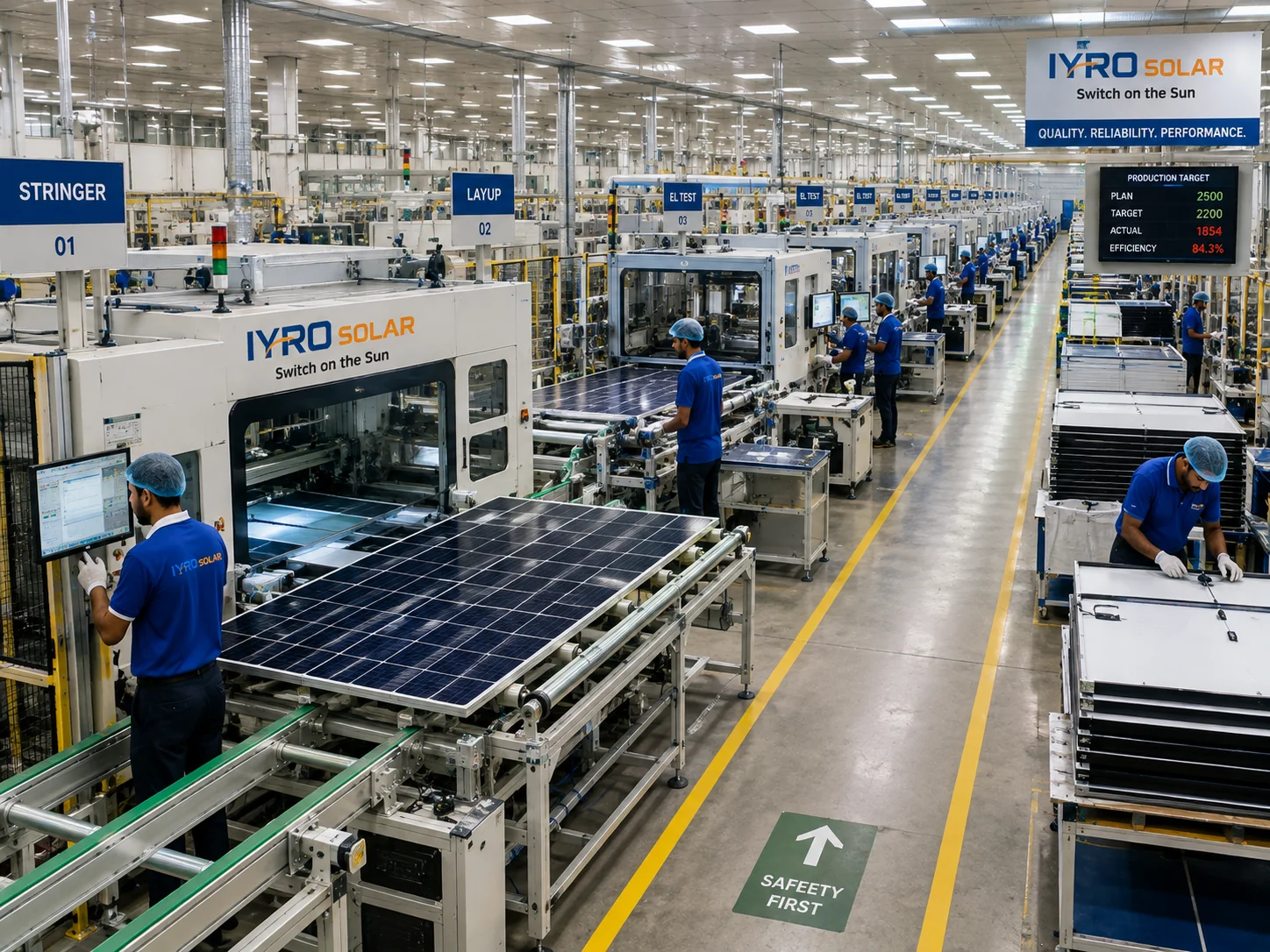
How We Think About It
Quality is a gate, not an inspection at the end.
Checking finished modules only tells you which ones to scrap. Every stage on our line has a gate in front of the next one, so a defect is caught while it is still cheap to fix — and, in the case of the pre-lamination gate, while it is still fixable at all.
Catch it early
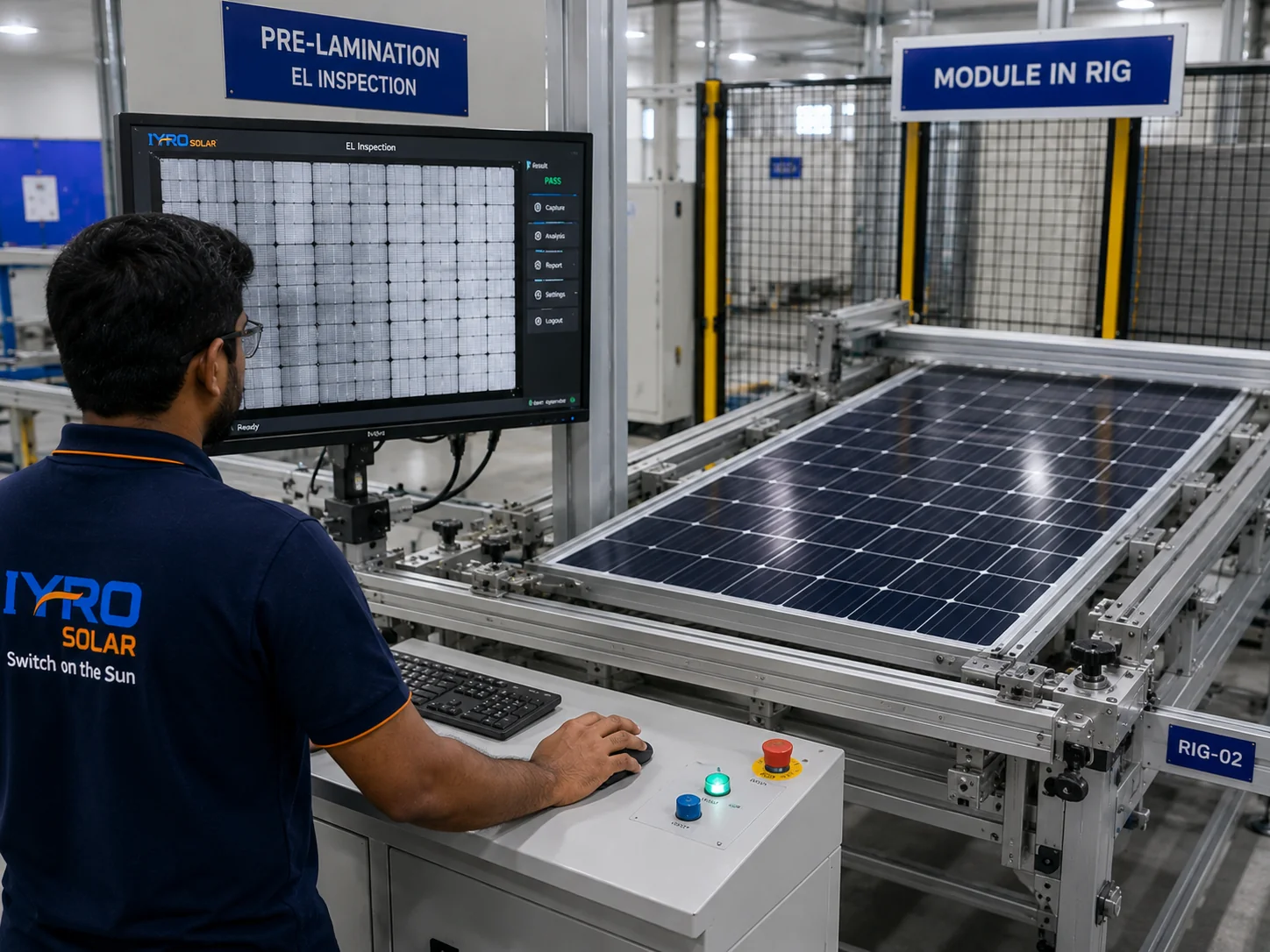
The first EL image is taken before lamination, because afterwards a cracked cell is scrap rather than rework.
Test everything
EL and flash testing run on every module produced. Sampling tells you about a batch; it tells you nothing about the module on your roof.
Record everything
Serial, stringer, laminator and operator shift are recorded together, so a question in year six still has an answer.
Publish it
Flash and EL reports go out against any serial number on request, including for modules already installed.
A Module's Journey
From a box of cells to a sealed pallet
Ten stages. Each one lists the gate it has to pass and the failure it exists to stop — because a process description that only says what happens proves nothing.
-
01
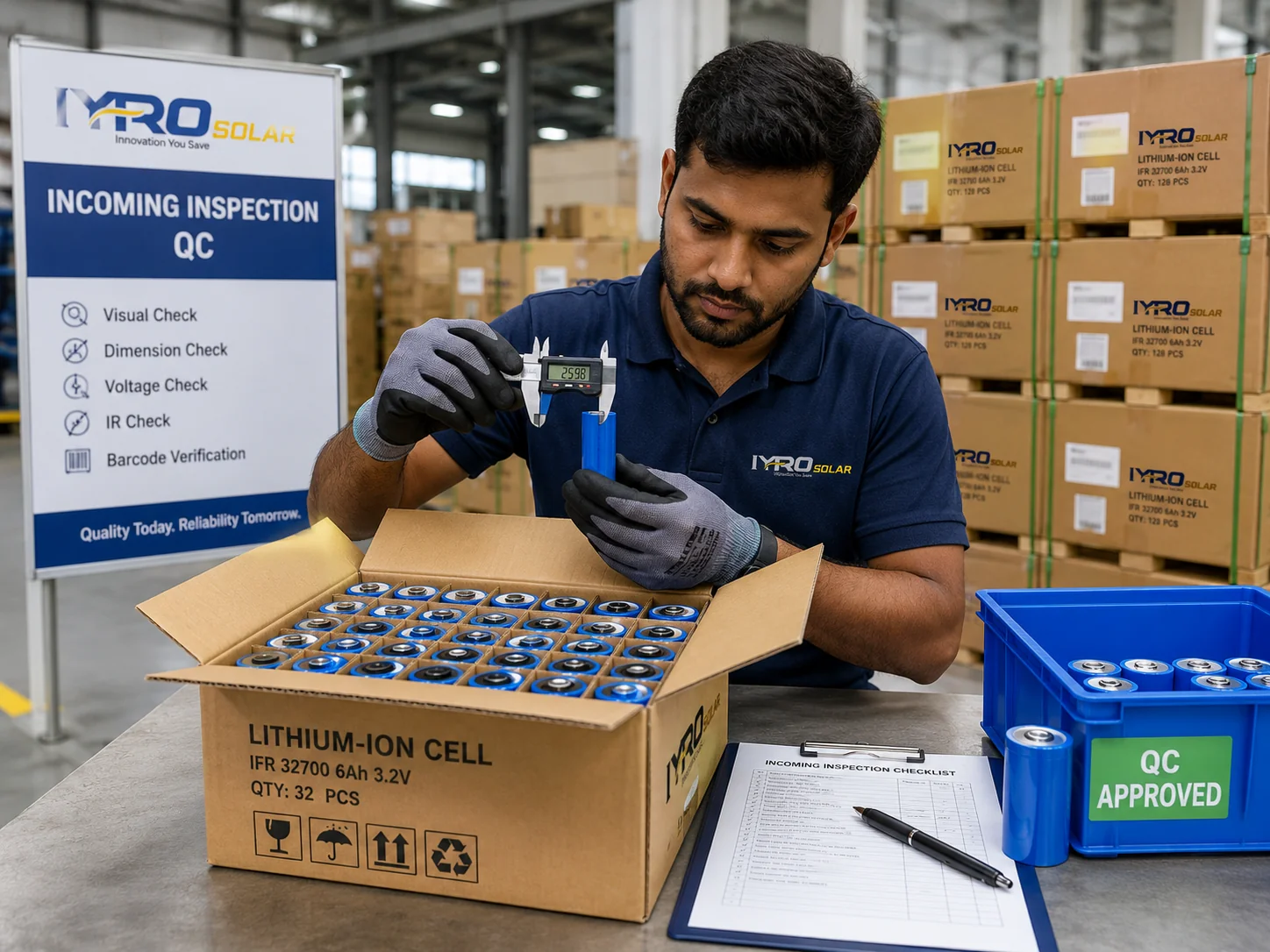
Incoming inspection
Cells, glass, EVA, backsheet, frames and junction boxes are checked against specification before anything reaches the line.
Prevents A bad batch entering production and being found only at flash test, by which point a day of output is affected.
-
02
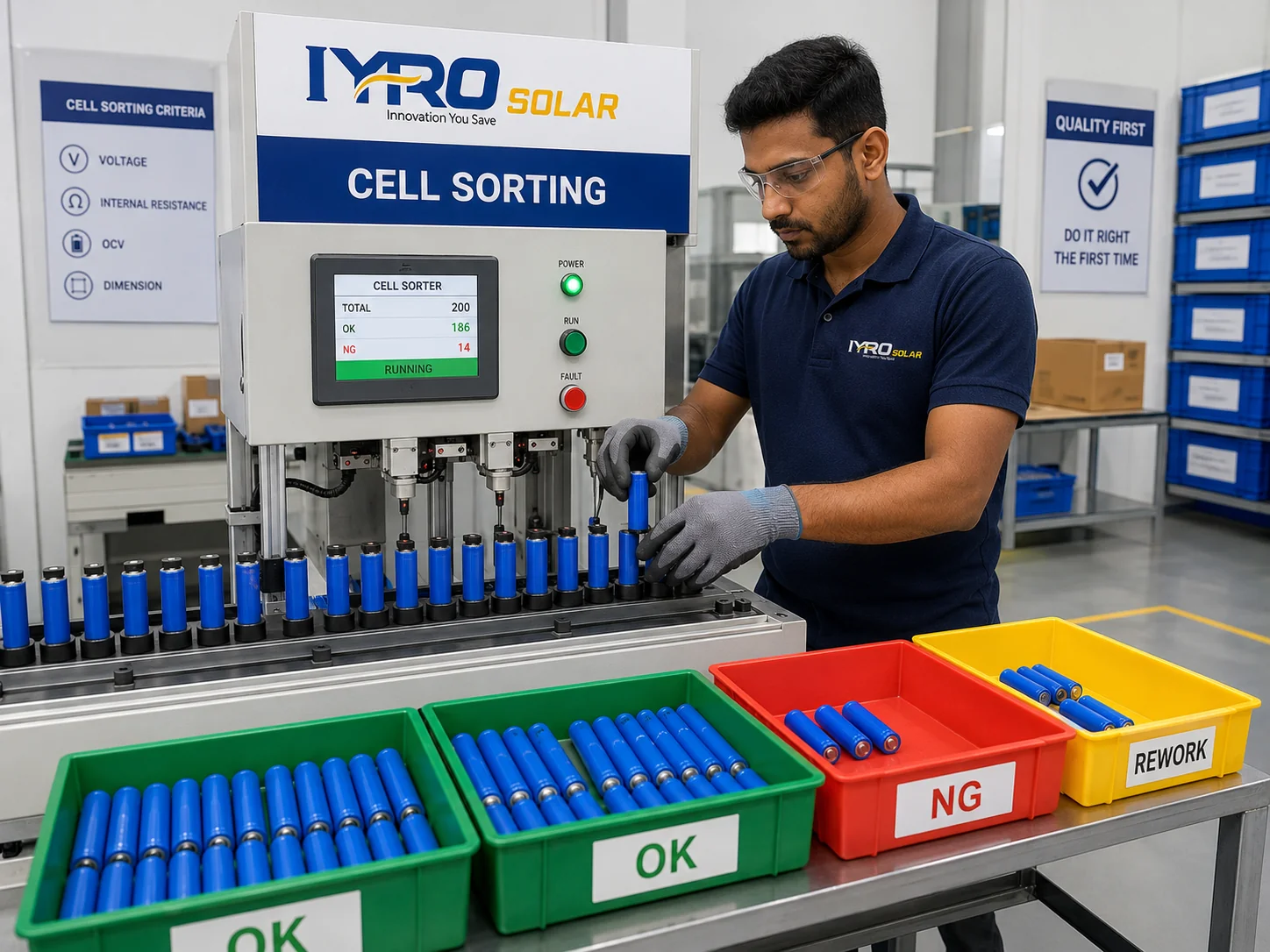
Cell sorting
Cells are graded by current bin so every string in a module is electrically matched.
Prevents Mismatch loss, where the weakest cell in a string caps the output of all the others.
-
03
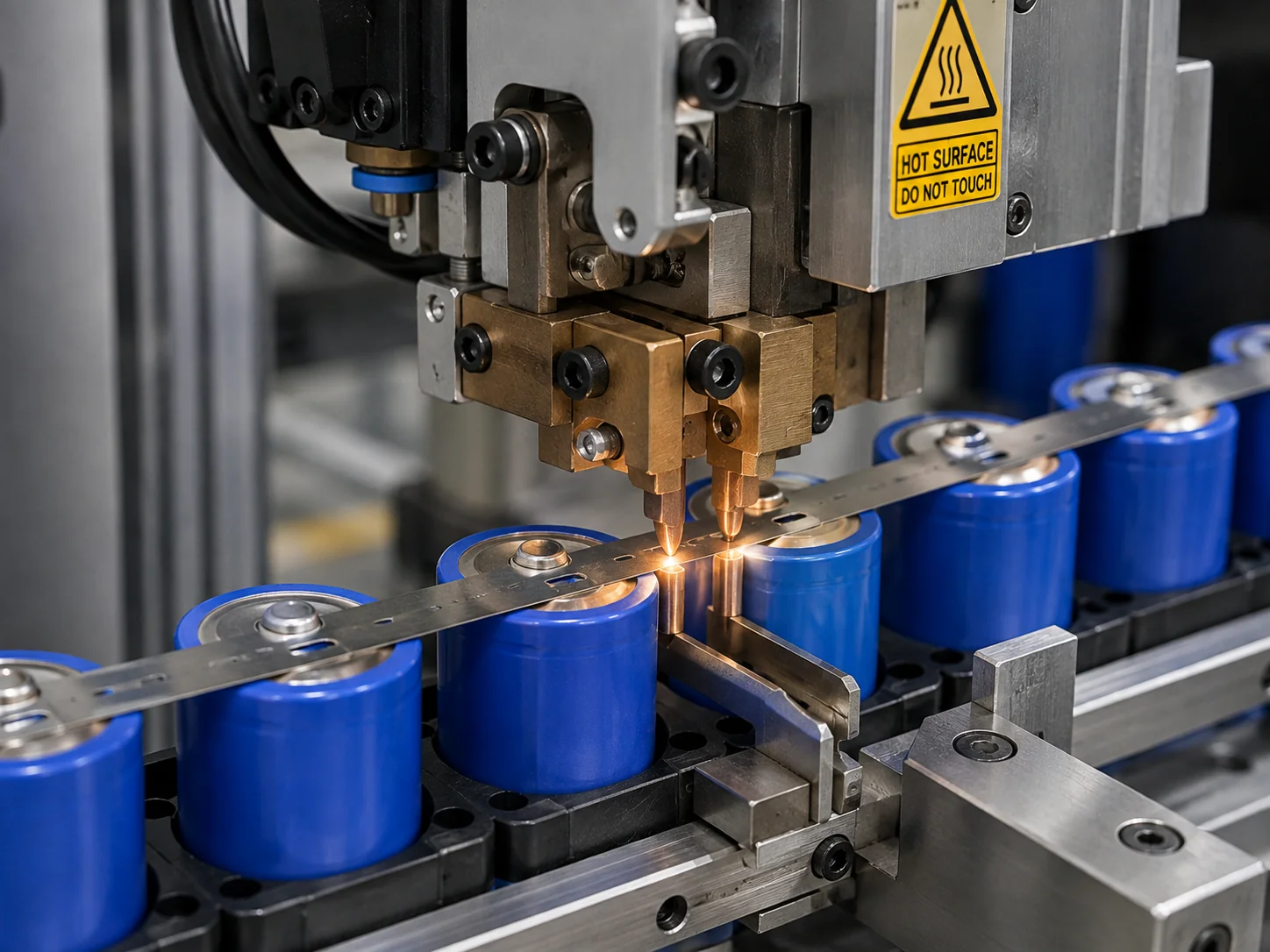
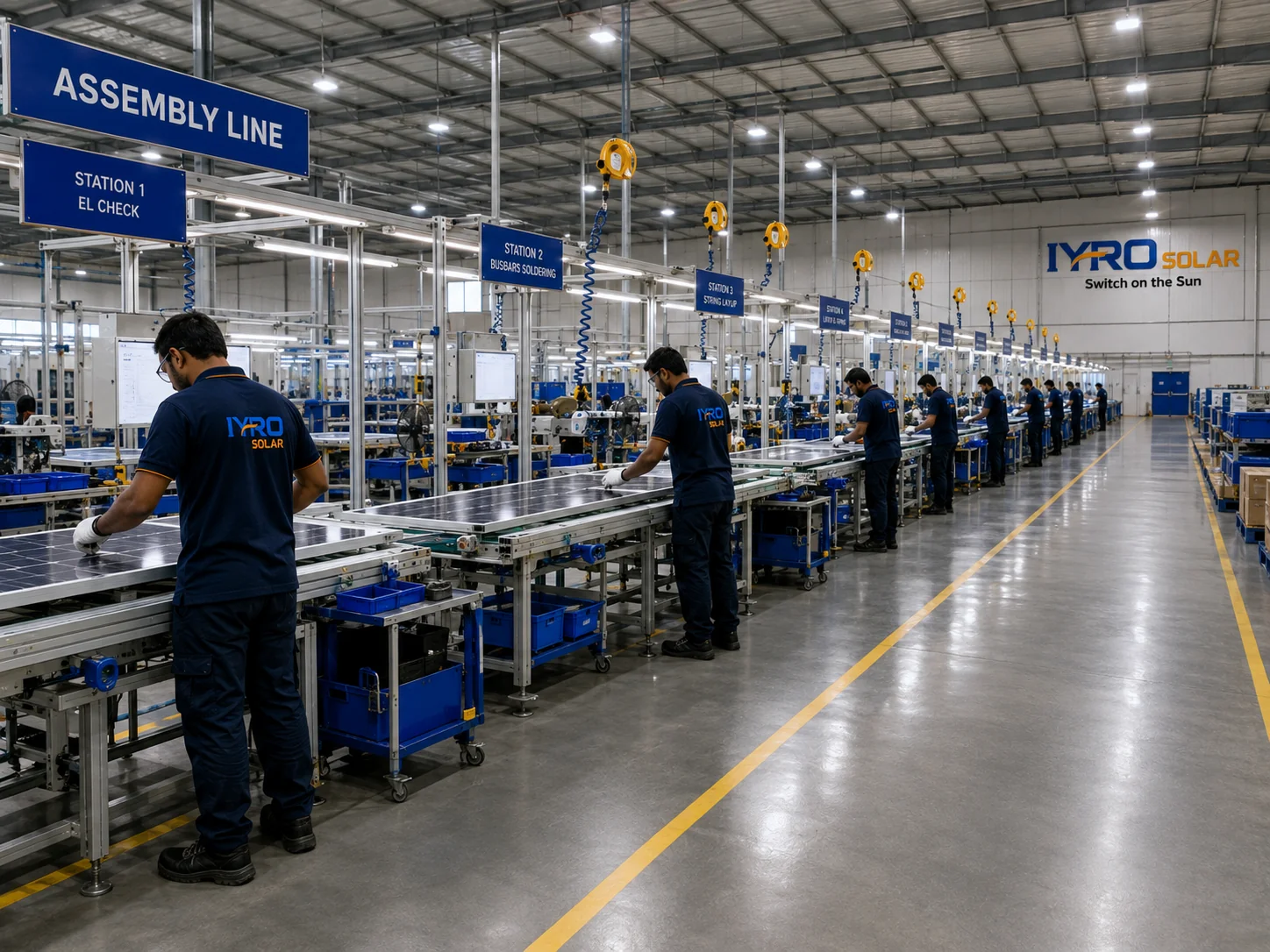
Automatic stringing
Infrared soldering at controlled temperature and dwell joins cells into strings.
Prevents Micro-cracks from over-soldering — invisible on the line, and the most common cause of field failures years later.
-
04
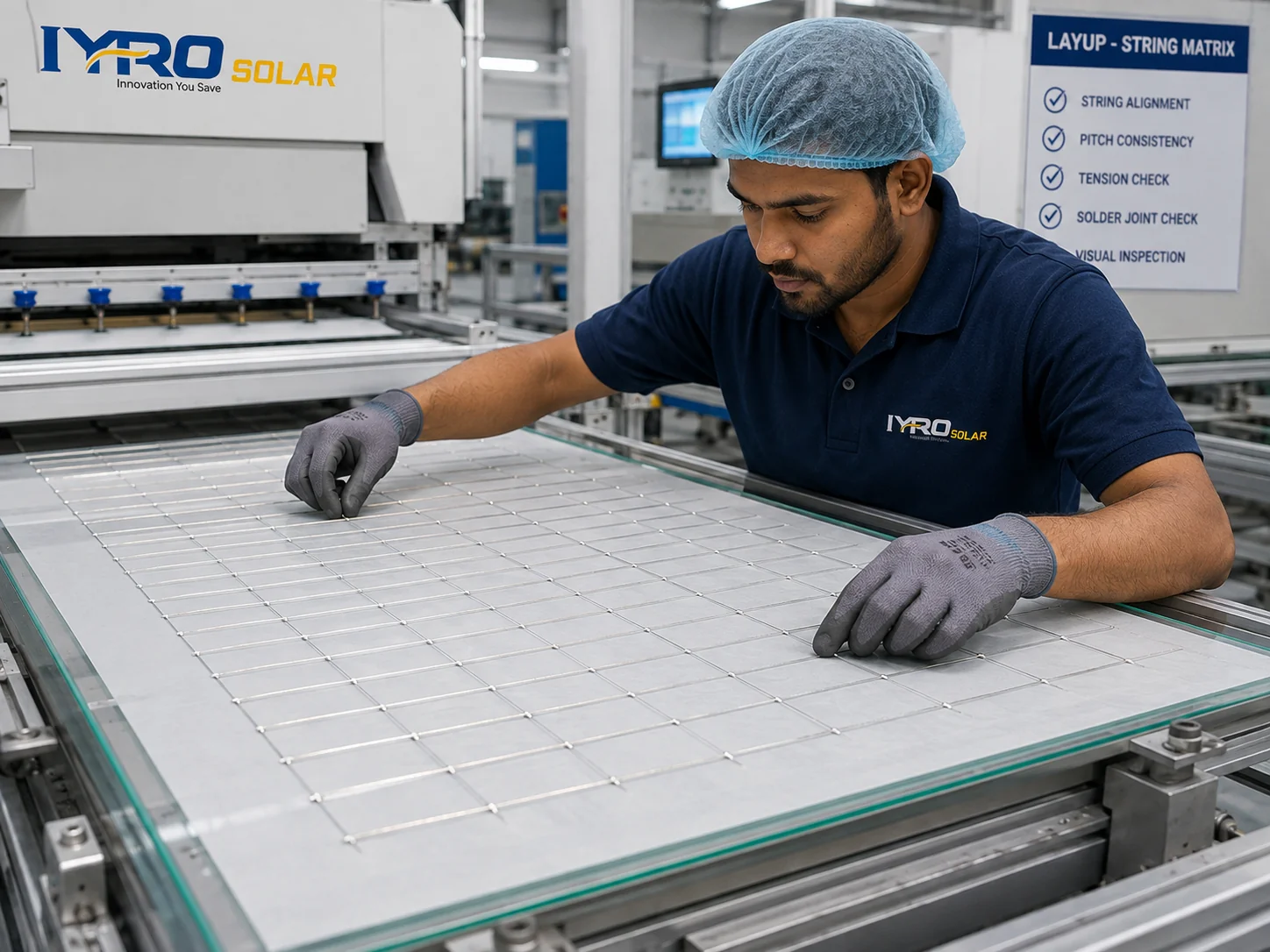
Layup
Glass, encapsulant, the string matrix and backsheet are stacked to fixed spacing.
Prevents Cell spacing drift and misalignment, which shows up as uneven output and edge shading.
-
05
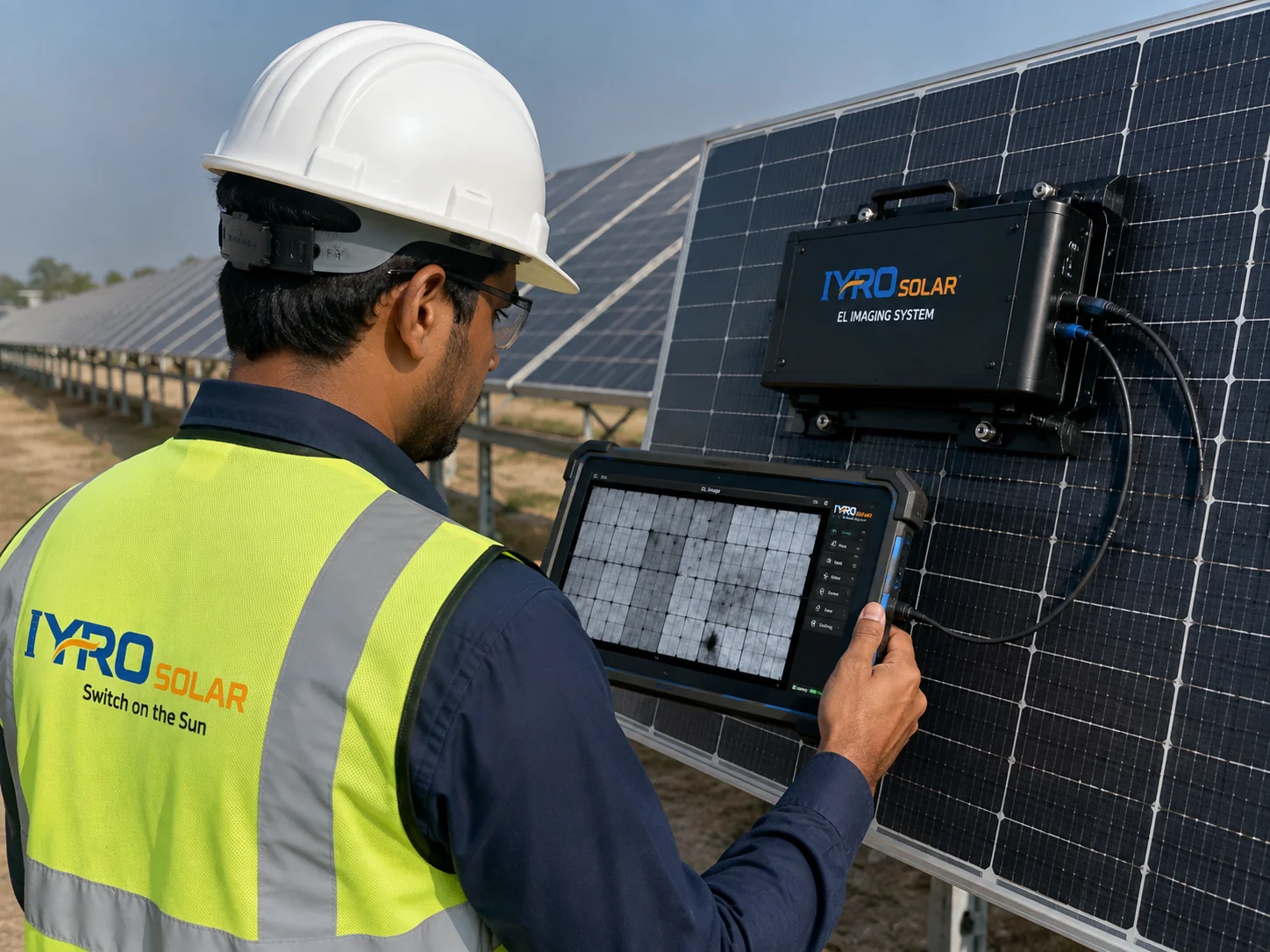
Pre-lamination EL
The first electroluminescence image, taken before the laminator.
Prevents Defects becoming permanent. After lamination a cracked cell cannot be recovered — the module is scrap.
-
06
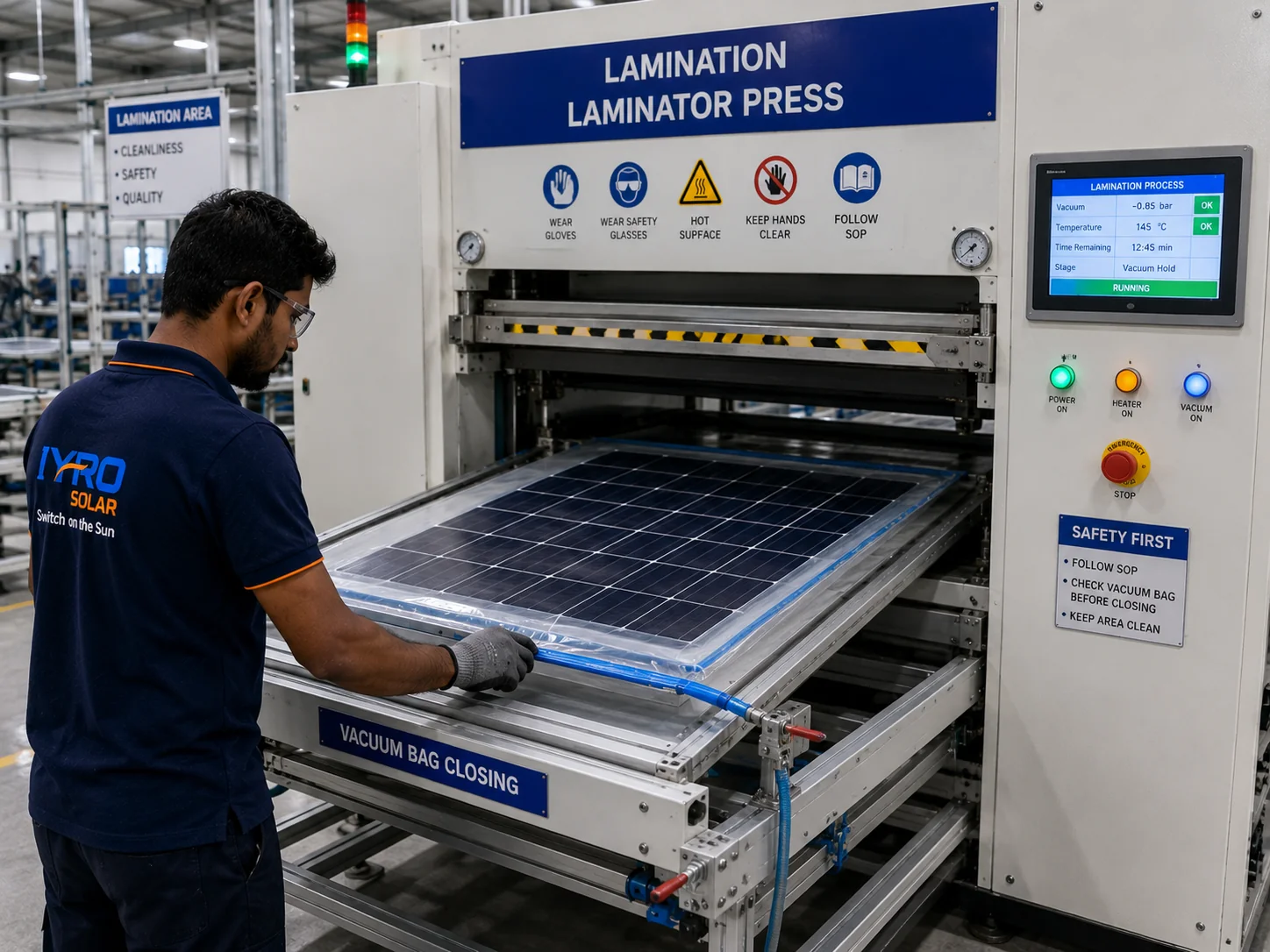
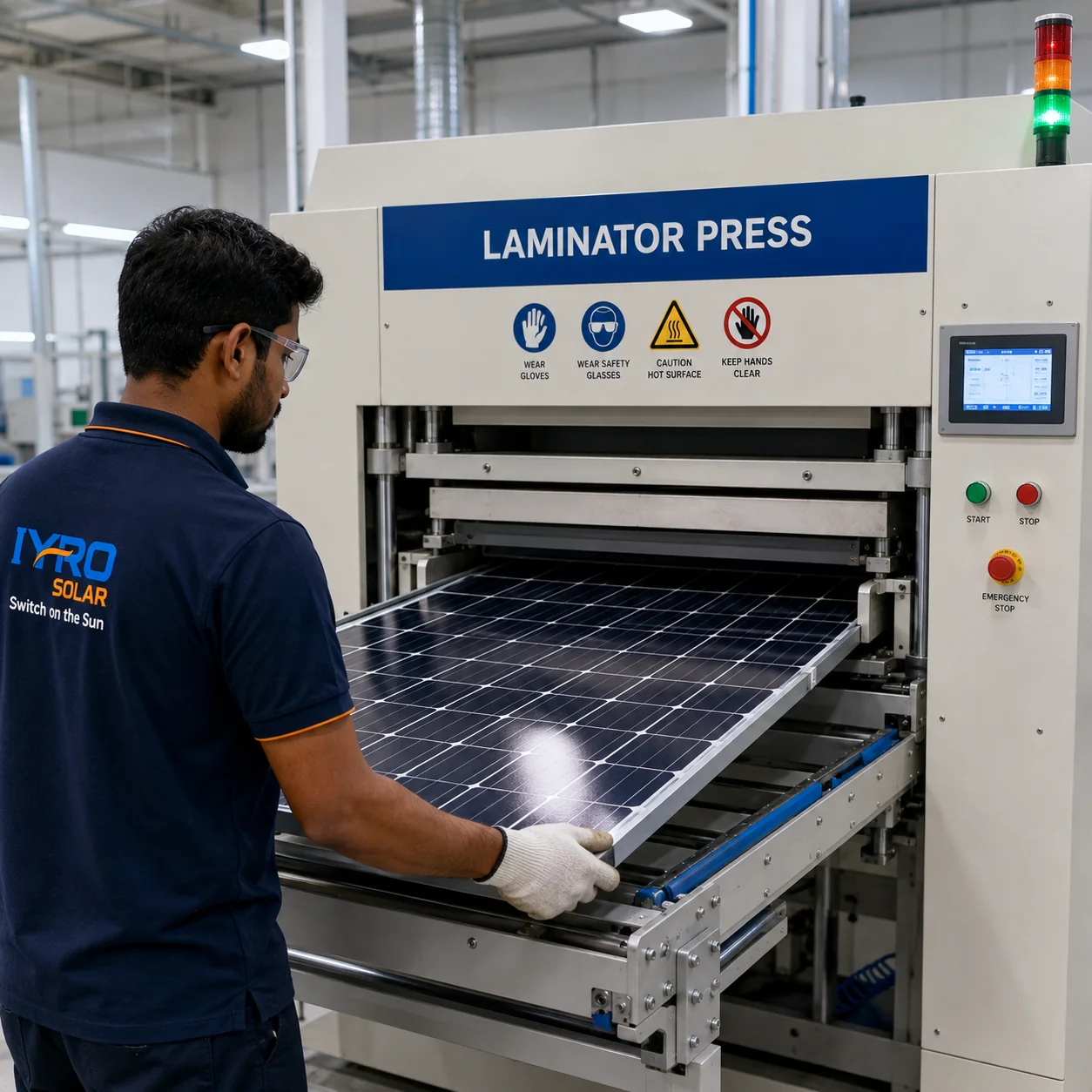
Lamination
Vacuum lamination with gel-content sampling monitored on every production shift.
Prevents Delamination and moisture ingress over a 25-year life, the failure mode that quietly ends a warranty claim.
-
07
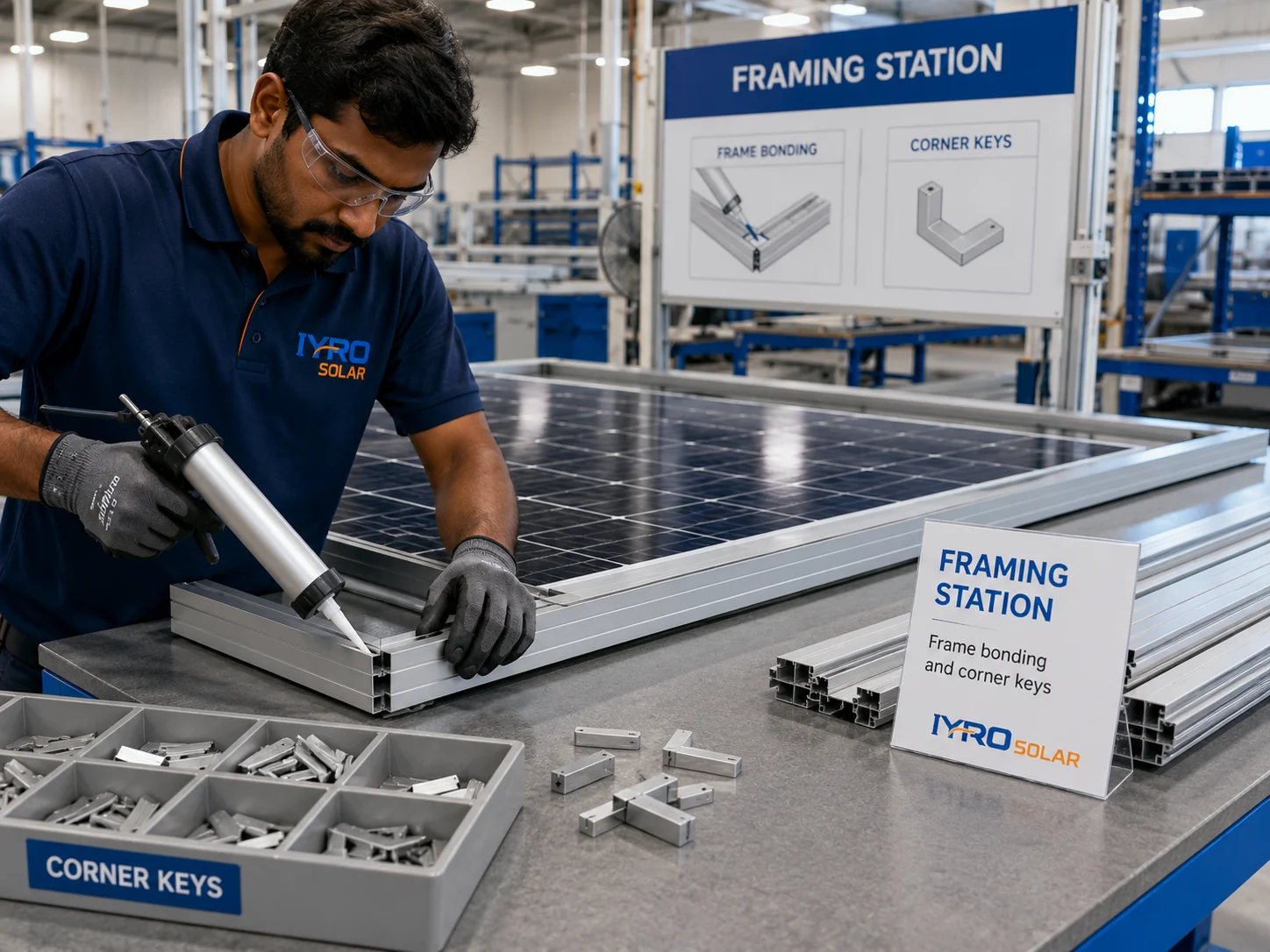
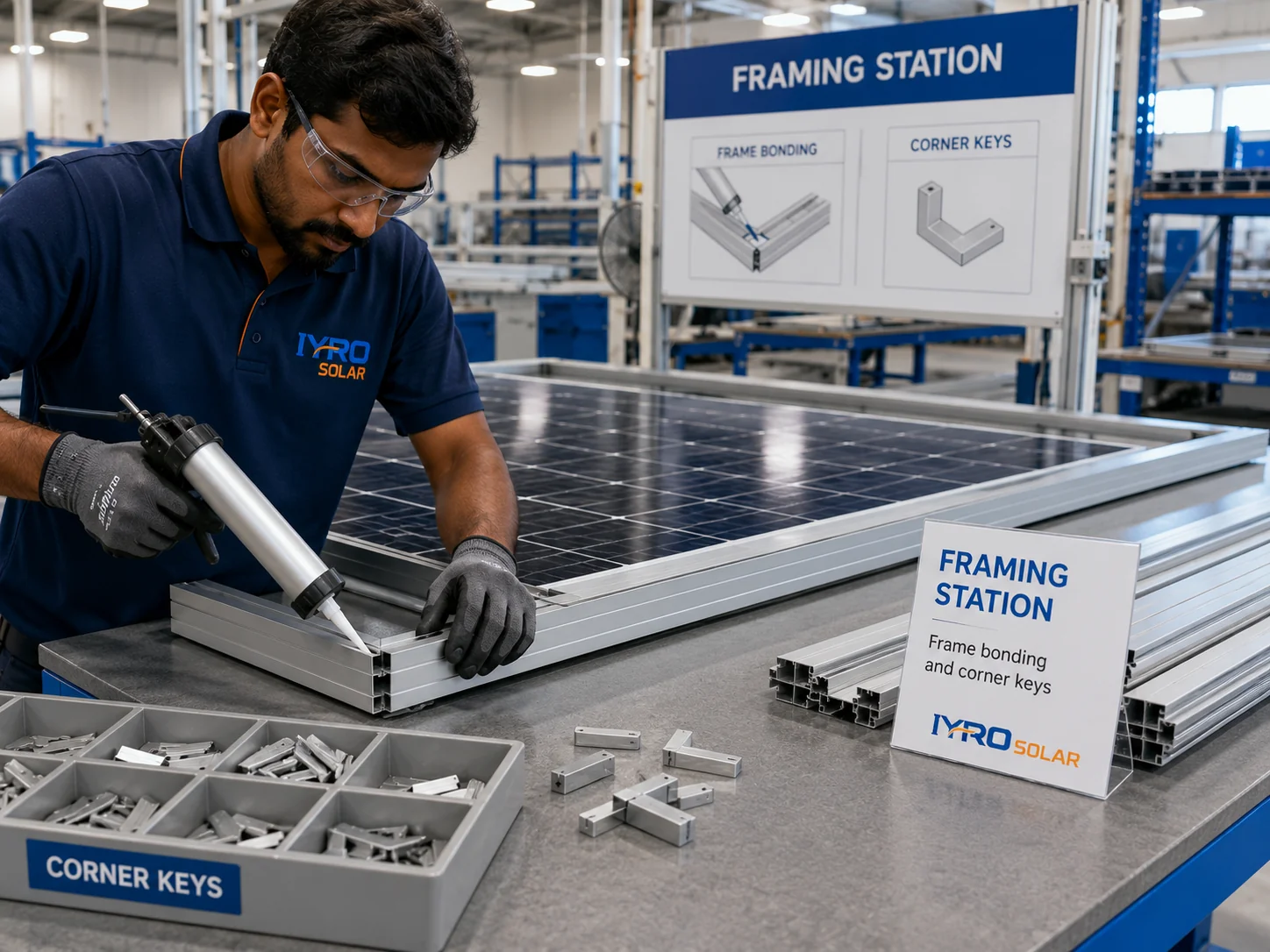
Framing and junction box
Silicone-bonded frames, potted junction boxes, and a pull test on the completed assembly.
Prevents Frame separation under wind load and junction box failure, both of which are site call-outs rather than factory returns.
-
08
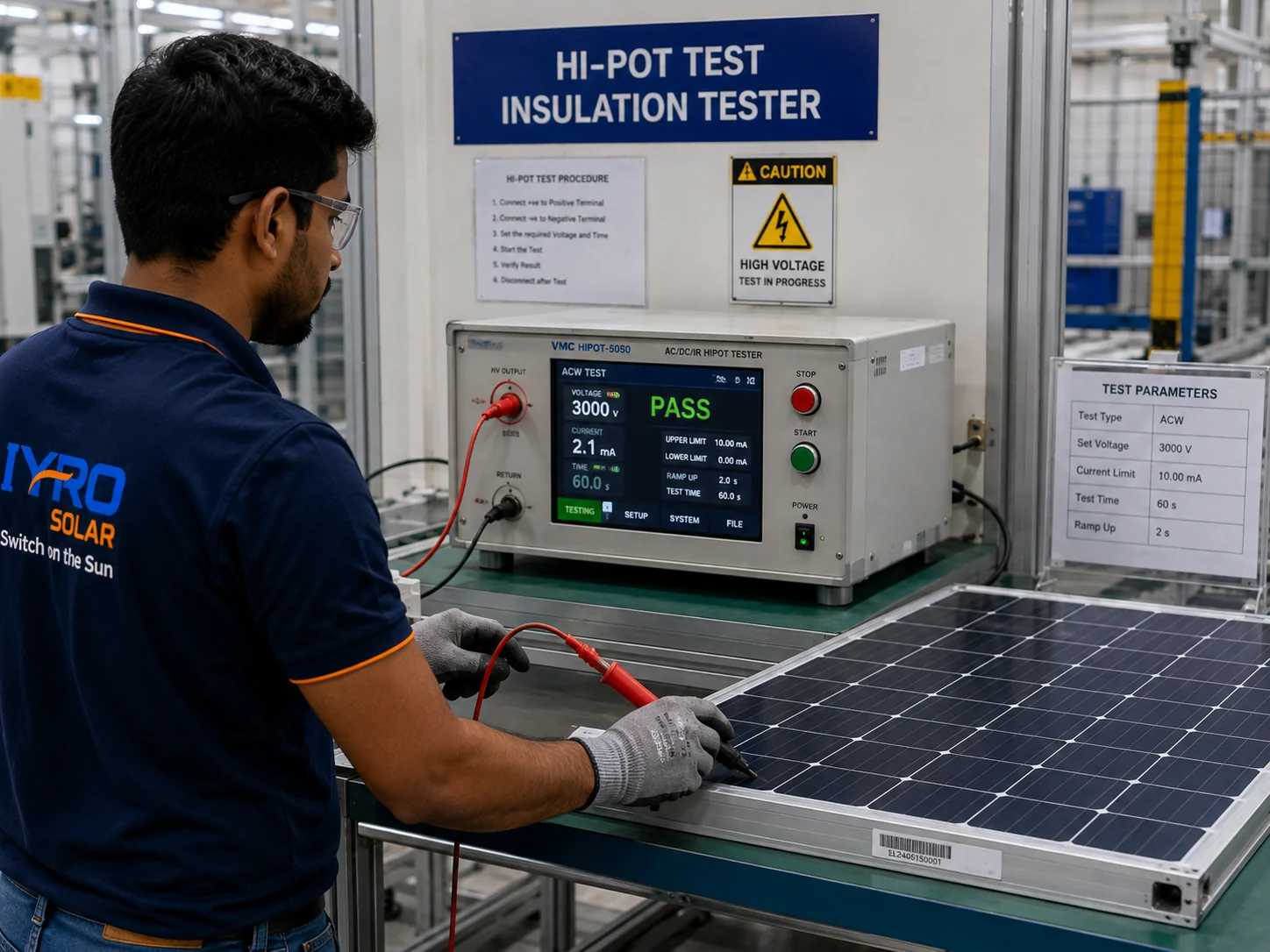
Insulation and hi-pot test
Dielectric withstand and wet leakage current testing on the finished laminate.
Prevents An insulation fault reaching a roof, where it stops being a quality issue and becomes a safety one.
-
09
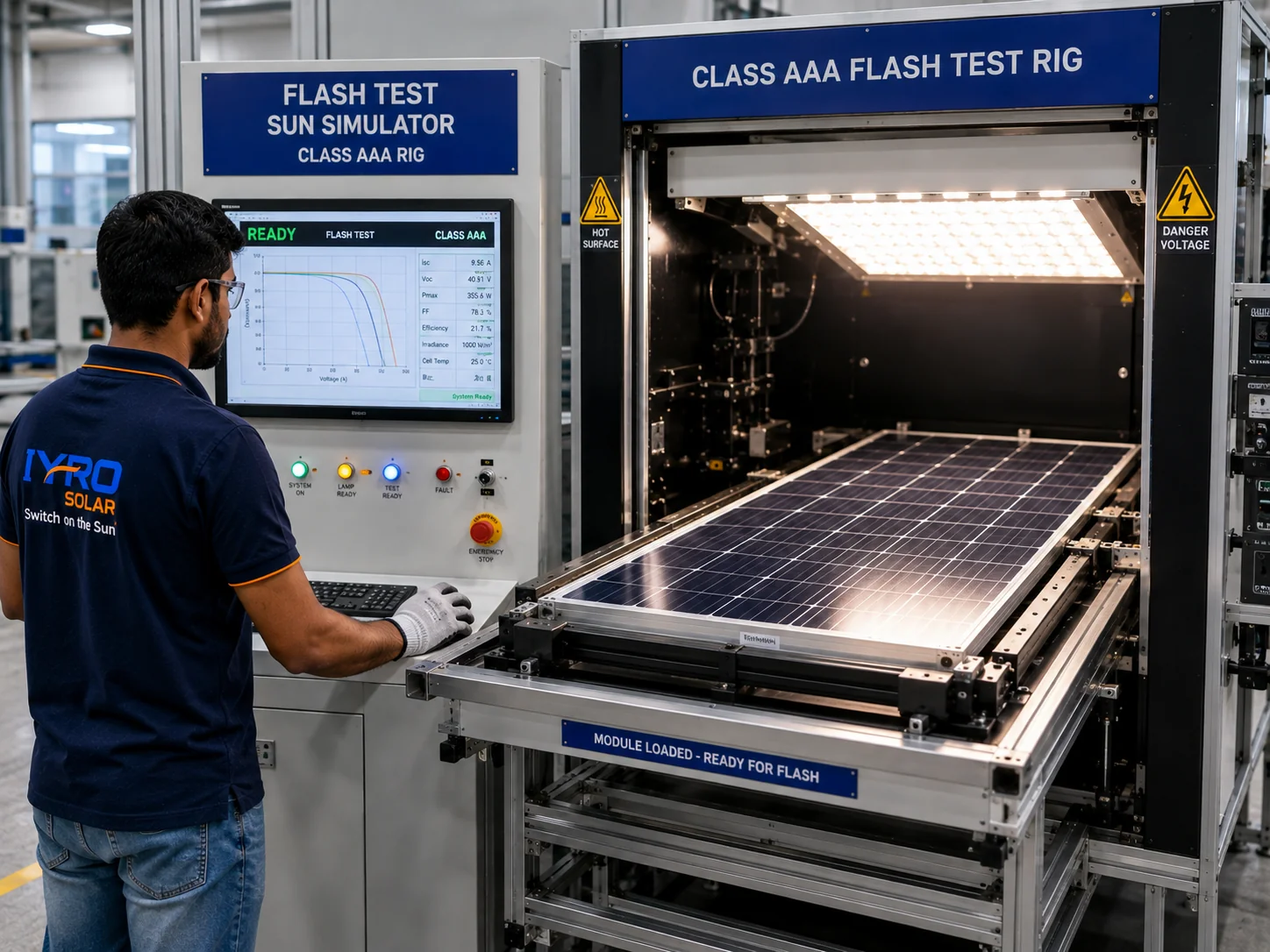
Flash test and final EL
A class AAA sun simulator establishes the power bin; a second EL image confirms nothing shifted during framing.
Prevents An under-performing or damaged module leaving the building at all.
-
10
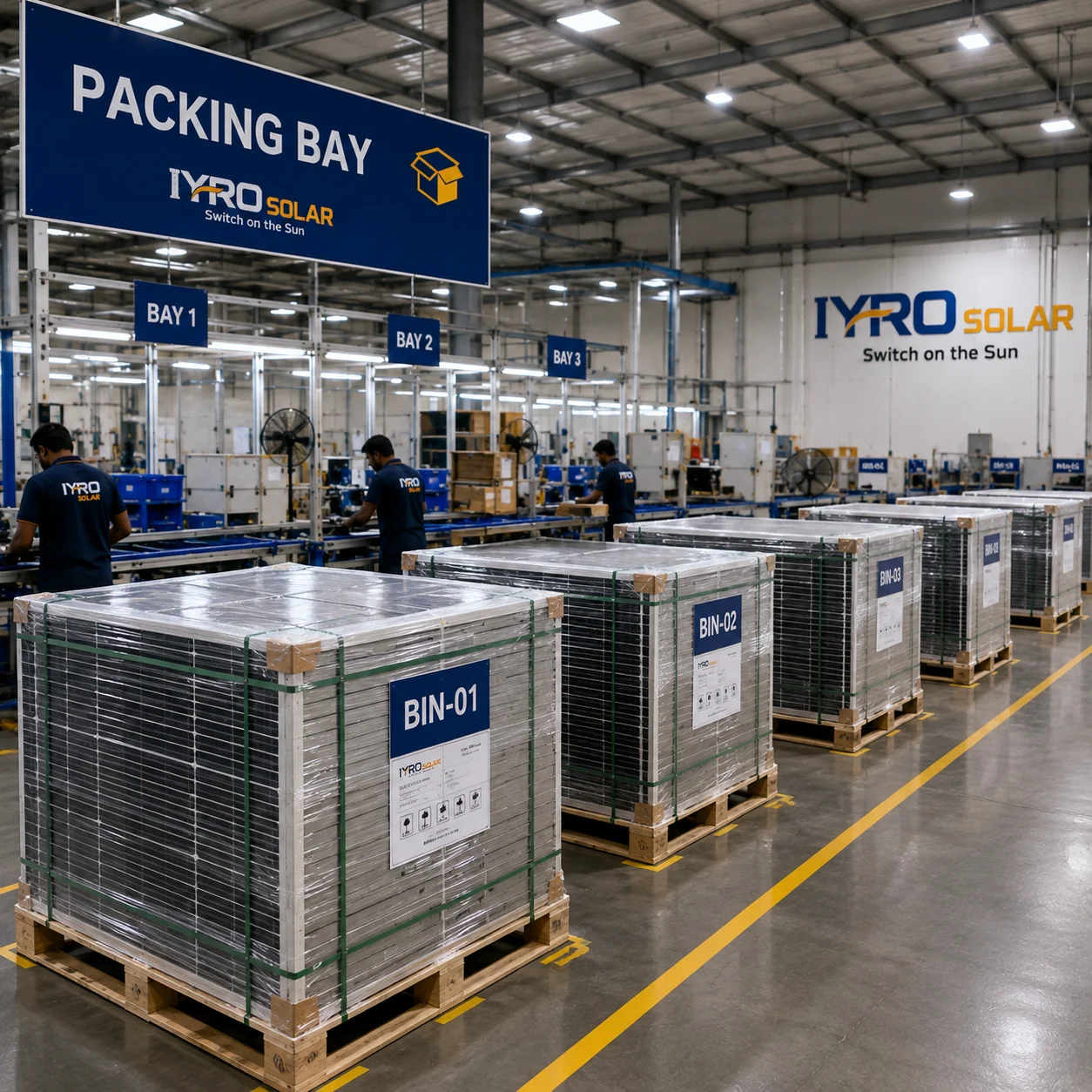
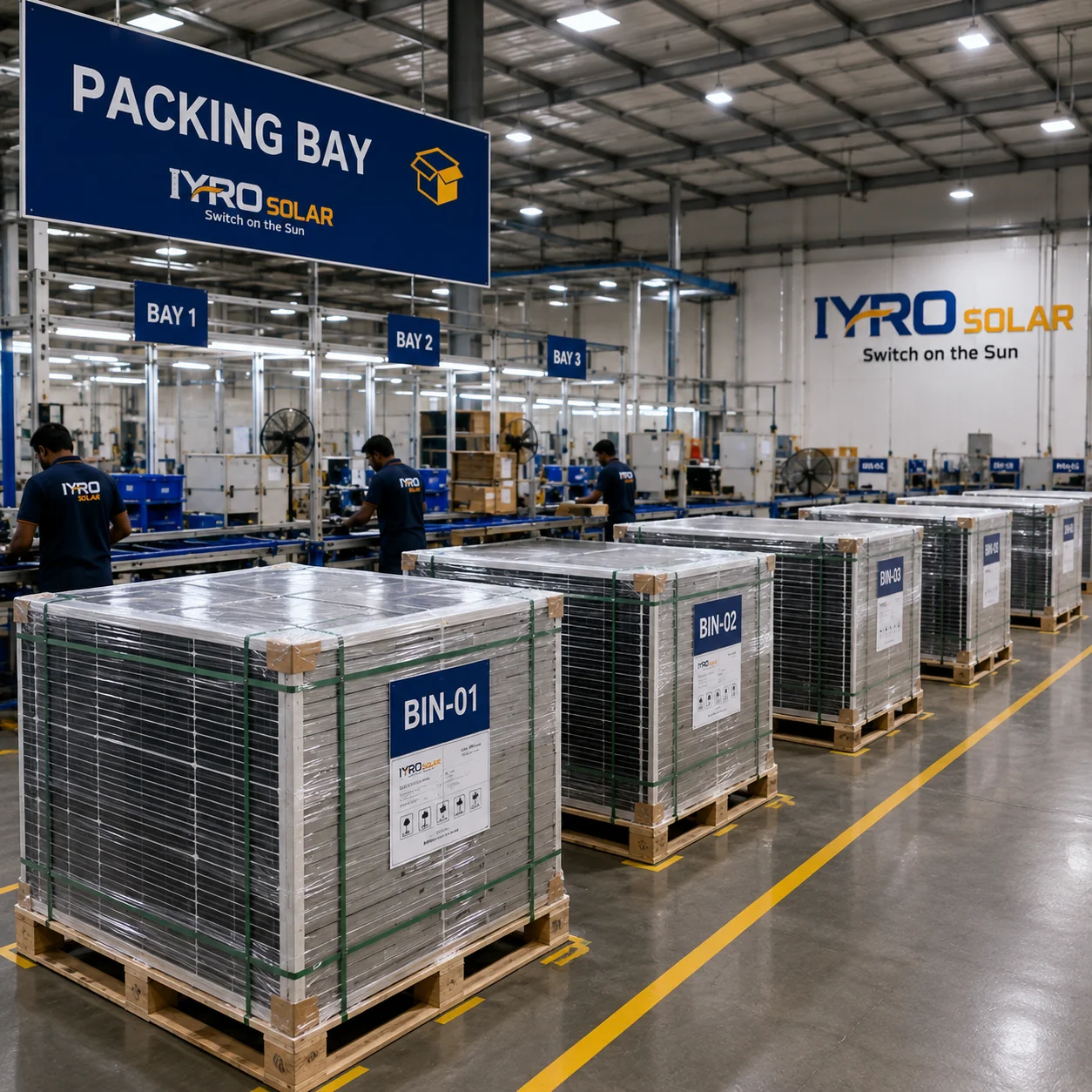
Bin sorting and packing
Modules are packed by power bin and every serial is recorded against the pallet.
Prevents Installers sorting a pallet on a live roof, and a despatch nobody can trace back afterwards.
Testing
Nothing ships untested
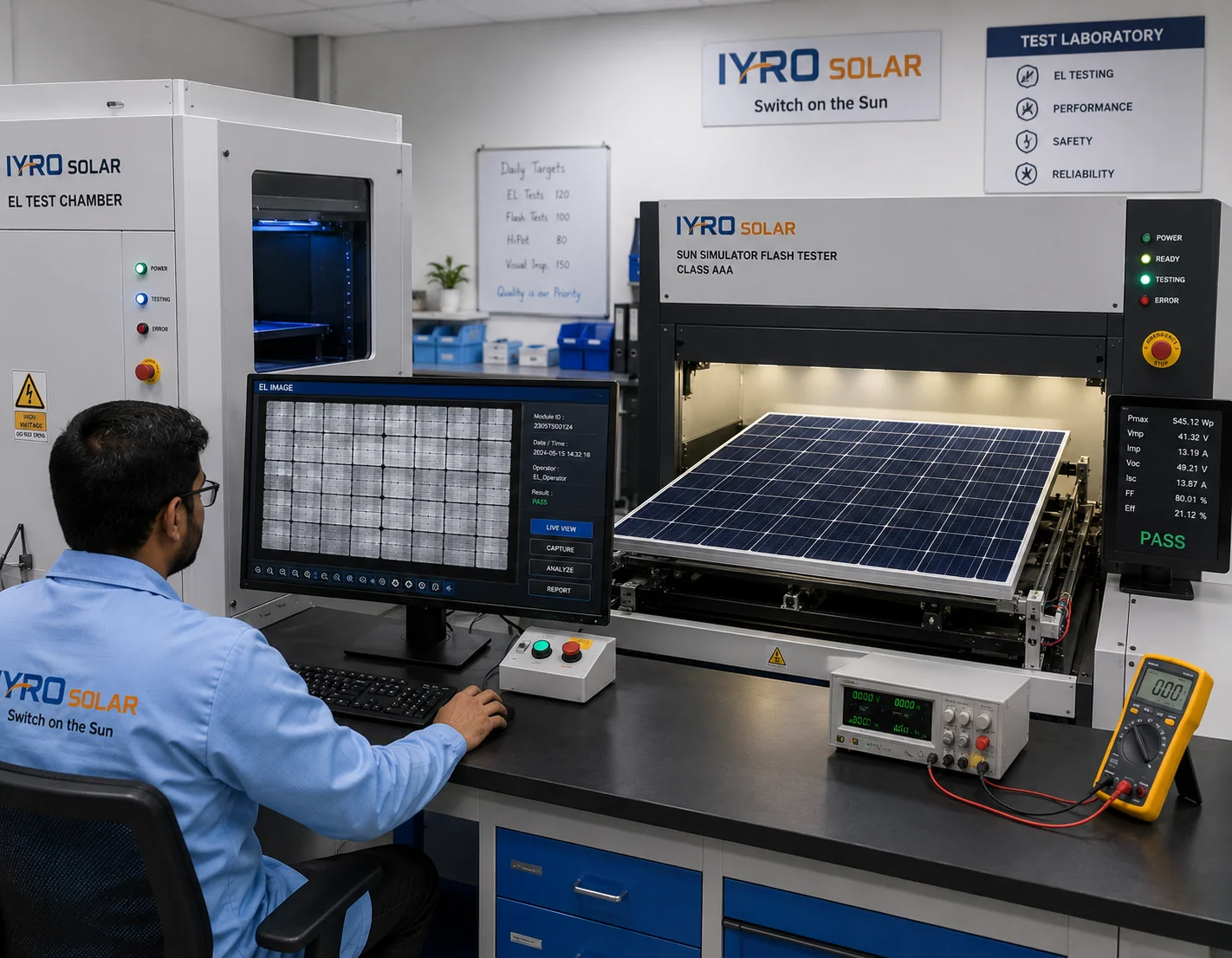
Two of these run on every single module. The rest run on samples to a defined frequency, and we will tell you which is which rather than implying all of it is 100%.
| Test | Coverage |
|---|---|
| Electroluminescence imaging | Every module, twice |
| Class AAA flash test | Every module |
| Insulation / hi-pot | Every module |
| Junction box pull test | Sampled per shift |
| Gel content | Sampled per shift |
| Wet leakage current | Sampled per batch |
Type approval tests — thermal cycling, damp heat, mechanical load, PID — are carried out by the accredited laboratory that issues our IEC certification, not in-house.
Standards
What each certificate covers
IEC 61215
Design qualification and type approval — thermal cycling, damp heat, humidity freeze, mechanical load. It is the test that predicts whether a module survives 25 years outdoors.
IEC 61730
Safety qualification. Construction and testing for electrical shock, fire and mechanical hazard. Distinct from 61215, and both are needed.
IS 14286 (BIS)
Mandatory Indian registration for crystalline modules. Without it a module cannot legally be sold for most applications here.
ISO 9001:2015
The quality management system itself — that the process is documented, audited and repeatable rather than dependent on who is on shift.
ALMM List-I
MNRE enlistment. Required for government, PSU and most subsidised projects; the first thing a tender evaluator checks.
RoHS
Restriction of hazardous substances in the bill of materials. Relevant to export and to institutional procurement policy.
Certificates are issued with every despatch and are available in advance for bid documentation. See all certifications
Inside The Plant
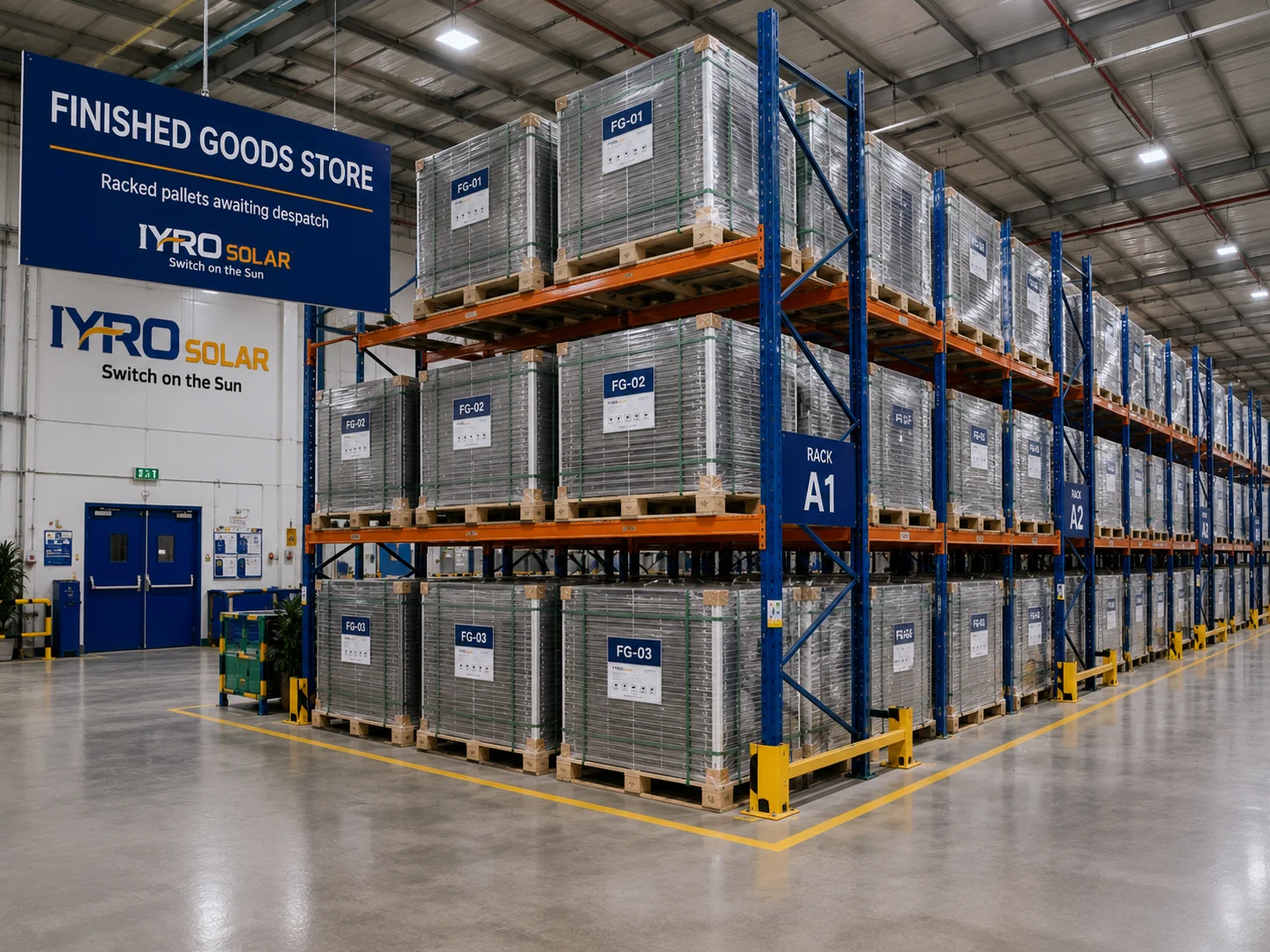
The rooms behind the process
Questions
What buyers ask about the line.
Can we visit the factory?
Yes — dealers, EPC contractors and third-party tender inspectors are welcome, and inspectors can select samples from the actual despatch lot. Give us a day's notice so the right engineer is on the floor.
Do you manufacture in-house, or rebadge?
Cells arrive as cells. Stringing, layup, lamination, framing and all testing happen on our own line under our own process controls. That is the reason a serial number can be traced back to the shift that made it.
Is every module really tested, or is it sampled?
Electroluminescence, flash test and insulation testing run on every module. Pull test, gel content and wet leakage are sampled to a defined frequency. We publish the distinction rather than describing all of it as "100% tested".
Can I get the test records for my despatch?
Yes. Flash and EL reports are issued at serial level for a whole despatch on request, including for modules already installed on site.
Do you take OEM or private-label orders?
For sustained volumes, yes. It is handled as a supply agreement rather than a catalogue order — send the specification and annual quantity and we will come back on feasibility.
Next Step
Come and check any of this.
Everything on this page is visible on the floor on a normal working day. That is the point of publishing it.